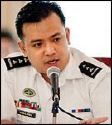
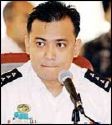
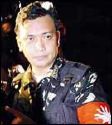
LTSG ANTONIO F. TRILLANES IV PN
October 2003
“The prime duty of the Government is to serve and protect the people.”
- 1987 Constitution of the Republic of the Philippines
October 2003
“The prime duty of the Government is to serve and protect the people.”
- 1987 Constitution of the Republic of the Philippines
THE OAKWOOD INCIDENT
On the early morning of July 27, 2003, a group of soldiers occupied the Oakwood Hotel in Makati to conduct protest actions against the Gloria Macapagal Arroyo Administration. Among the grievances they voiced out was GMA’s alleged responsibility for the Davao bombing incidents.
In the investigations that followed, the soldiers admitted that the ultimate sources of their information are the so-called Greenbase Documents. How true are these documents? What exactly is OPLAN GREENBASE all about? Indeed, what did these documents contain that were serious enough to drive these soldiers to rise against their very own Commander-in-Chief? Unfortunately, the answers to these questions never came as the investigations focused more on the peripheral issues such as armbands and on whether the soldiers’ actions were spontaneous or not. Eventually, the Greenbase issue was buried and forgotten.
Until now…
GMA’s PEACE POLICY
Upon assumption to power, GMA adopted an all-out peace policy for all the different rebel and secessionist groups. This was articulated in her own Executive Order #3 signed on 28 Feb 2001 entitled “Defining Policy and Administrative Structure for Government’s Comprehensive Peace Efforts” (see Annex A) where a comprehensive peace process provided a holistic framework in addressing the long-running insurgency and secessionism in the country.
Likewise, in her Medium-Term Philippine Development Plan 2001-2004, she stressed that the vision for sustained peace and development in Mindanao is the peaceful coexistence of all stakeholders. “It outlined the challenges to be addressed such as: preventing the recurrence of armed conflict; addressing cultural inequity as manifested in the loss of ancestral lands and non-consideration of cultural aspects in programs and projects, and in addressing political inequity through the full implementation of autonomy, increased representation in government of Muslims and lumads, and improved conflict resolution and negotiation mechanisms.” (Relief, Rehab efforts intensified in Mindanao, Manila Times, 19 June 01).
As regards peace efforts with the Moro Islamic Liberation Front (MILF), confidence-building measures complemented these peace policy declarations. On 20 Feb 2001, GMA announced the suspension of offensive military operations (SOMO) with the MILF. A few days later, then Justice Secretary Perez said that the multiple murder and multiple frustrated murder charges against the MILF leaders would be returned to the DOJ for reinvestigation. (Raps vs MILF leaders dropped. Inquirer News Service. 24 Feb 01). Then on March 16, NBI Director Reynaldo Wycoco announced that the Rizal Day bombing was not the handiwork of the MILF. (Rizal Day attacks, NBI clears MILF on bombings. PDI. 17 Mar 01).
On 24 March 2001, the Agreement on the General Framework for the Resumption of Peace Talks is signed by the GRP and MILF panels in Kuala Lumpur, Malaysia. (State of the Nation Address (SONA) 2003 Technical Report). This paved the way for the MILF’s suspension of all offensive military action in their areas of operation on 03 April 2001.
The first round of formal Peace Talks were held in Tripoli, Libya on 22 June 2001 where both panels signed the Agreement on Peace between the GRP and the MILF. The second round was held on 07 August 2001 that resulted to the signing of the Implementing Guidelines on the Security Aspect of the GRP-MILF. Then on 18 October 2001, the third round of Peace Talks was held in Kuala Lumpur where both panels signed the Manual of Instruction for the Coordinating Committee on the Cessation of Hostilities and the local Monitoring Teams. (SONA 2003 Technical Report).
In the ensuing months, while there were still some minor clashes between the AFP and the MILF, the peace talks seemed to be holding. Which led GMA to say that “the sincerity of the MILF top command to join the mainstream and let their people share whatever development there can be is really very, very clear.” (Presidential News Desk News Release No. 7, 27 Feb 02). For a while it seemed that the ever-elusive peace in Mindanao is finally at hand.
But in early February 2003, AFP operations were stepped up in Central Mindanao incurring heavy losses on the side of the MILF. The AFP said that the reason for the attack was to dismantle two new MILF camps. (Abaya: MILF suffers heavy casualties in Mindanao operations. Froilan Gallardo. inq7.net. 05 Feb 03). Then on Feb 11, the Army’s 6th Infantry (K) Division launched a full-scale attack on the Buliok Complex in the Liguasan Marsh Area in Pikit, North Cotabato. (The Fall of Buliok Complex – 6ID. 03 Mar 03. Downloaded from http://www.army.mil.ph/). Suddenly, the government is again at war with the MILF.
BULIOK OFFENSIVE’S RATIONALE
In justifying the renewed attacks, Foreign Affairs Secretary Blas Ople said “the AFP units entered this area by the Liguasan Marsh for only one purpose: to apprehend the criminal elements of the notorious Pentagon Gang that had fled to the Buliok Complex, seeking sanctuary in the MILF camps.” (Statement of Sec. Blas Ople in a briefing for OIC Ambassador, DFA. 19 Feb 03). Defense Secretary Angelo Reyes meanwhile said that the AFP was “in hot pursuit of certain lawless elements, principally the kidnap-for-ransom groups and people responsible in the bombing last December 24.” (Tension up in North Cotabato ahead of troops-MILF clash. Froilan Gallardo. inq7.net. 10 Feb 03).
Could these be the real reasons for launching a full-scale war with the 10,000-strong MILF and negating all the milestone achievements in the peace talks? Just so that a band of 100 kidnappers could be apprehended? Or, the hot pursuit of lawless elements who committed a crime more than a month before?
But then again, Sec. Reyes himself acknowledged before the Congressional Oversight Committee on the VFA, which was studying the feasibility of holding RP-US war games in Sulu, that “he was uncertain if those killed during the Buliok operations were Pentagon Gang members or Muslim guerrillas.” Asked further if the mission was accomplished? All Sec. Reyes could answer were “I don’t know” or “I cannot recall” responses, which disappointed Senators Biazon, Pimentel and Angara. Sen. Biazon even commented, “I think the Defense Secretary is trying to evade responsibility for the Mindanao problem.” (Reyes comes under fire for ordering the Buliok offensive. Joshua Dancel. Manila Times. 12 Mar 03)
Now, if the official reason for the Buliok operations given by the government is not true, then what is? What could have motivated GMA to turn her back on her own peace initiatives and plunge her country and people into a war that would eventually kill hundreds of people, injuring thousands more and displacing at least 300,000 civilians?
THE GREENBASE DOCUMENTS
The Greenbase Documents are actually photocopies of what appeared to be two official Malacañang documents. The first is a Memorandum of Instructions dated 11 Feb 2003 addressed to then Defense Secretary Angelo Reyes and purportedly signed by GMA. (see Annex B).
The second is purportedly signed by then Presidential Adviser on the Peace Process Eduardo Ermita and is entitled “The President’s Four-Point Policy Framework in Addressing the Southern Philippine Secessionists/MILF Problem (Pursuant to the Presidential Memorandum of Instructions approved on 11 Feb 2003) (see Annex C). Both documents were leaked sometime in February 2003 right after the start of the Buliok Complex offensive.
The Memorandum of Instruction (MOI) authorized the implementation of OPLAN GREENBASE, which is basically an action plan to capture and occupy the Buliok Complex fronting the Liguasan Marsh Area. The reason for the clearing operations is to enable the NEDA to implement the 25-year Liguasan Marsh Development Framework Plan and the revival of the Farm-In Agreement and Joint Operating Agreement between Philippine National Oil Company-Exploration Corporation and Petronas Carigali Sdn Bhd.
Another objective of the plan according to the MOI is to capture MILF Chairman Salamat Hashim dead or alive. Also, the MOI explicitly stated that all matters pertinent to OPLAN GREENBASE should be coordinated with the Presidential Adviser on the Peace Process and the Presidential Adviser for Special Concerns.
The Four-Point Policy Framework (FPPF) meanwhile, detailed and expanded OPLAN GREENBASE into an action plan that would operationalize the approved MOI of GMA. The action plan is broken down into a four-point policy framework.
The first point provided the guidelines for the capture and occupation of the Buliok Complex and the capture of MILF Chairman Salamat Hashim.
The second point explicitly stated that the Agreement on the General Cessation of Hostilities has been suspended indefinitely. Moreover, the government will set up a monitoring team to absorb the duties and functions of the yet to be formed, OIC monitoring team.
The third point is about the government’s intention to invoke its right for the MILF to observe the May 6 joint communiqué where the MILF agreed to interdict criminal elements taking refuge in these controlled areas. It also states that once the Liguasan Marsh is cleared of the MILF, the Liguasan Marsh Development Plan, the Farm-In Agreement and Joint Operating Agreement between PNOC-EC and Petronas Carigali Sdn Bhd and the Manila-Tripoli-Kuala Lumpur palm oil project could be implemented.
The fourth point, however, is the most controversial part of the whole document. In its entirety it states:
“The MILF must be held responsible for the AFP-backed spate of bombing in urban areas and destruction of several Napocor transmission towers, power sub-stations and barges, the Mt. Apo Geothermal Power Plant, the Pulangi Power Plant, and power plants of electric cooperatives and companies in Mindanao. Appropriate charges of rebellion, sedition, multiple murder and multiple frustrated murder will be filed against MILF leaders in various courts in order to secure warrants of arrest against them and reduce them in estoppel.
“The AFP’s plan to conduct comprehensive psywar operations over print and broadcast media, and destabilizations in urban Christian areas, such as Davao International Airport, Awang Airport, Gen Santos City International Standard Airport, Zamboanga International Airport, Cagayan de Oro Airport, principal ports and wharves, foreign embassies and consulates, hotels and restaurants, shopping malls, hospitals, churches, public markets and terminals, radio and television stations, factories, oil depots and gasoline stations, buses, cinemas, schools, plazas and others must be intensified and thereafter put the blame on the MILF so as to convince the Asean, the European Union, and the United States’ State Department to formally declare the MILF as a FOREIGN TERRORIST ORGANIZATION and Chairman Hashim Salamat as a Specially Designated Global Terrorist because of the gravity and magnitude of threat he and the MILF pose on the national security and territorial integrity of the Philippines and Asean Countries. Hashim’s capture or death, and MILF’s designation as an FTO will ensure the smooth conduct of Balikatan 03-1 in Central Mindanao and the US troops’ planned basing in Sarangani-Gen. Santos City.”
PROPAGANDA or ACTION PLAN?
The assertions of the GMA Administration against the Greenbase documents were articulated by Presidential Spokesperson Ignacio Bunye when he said in a press briefing on 27 Feb 2003, “We’d like to state that this document is spurious. It is not true. This document is fake and it has been circulated probably to agitate the Muslim population in Mindanao.” (Downloaded from http://www.op.gov.ph/). On the other hand, the claim of the protesting soldiers in Oakwood was that the OPLAN GREENDBASE contained in the documents was an action plan authorized by GMA herself and executed by different government agencies.
Since a spurious or propaganda material is supposed to contain false information while an action plan is based on true information, instructions or guidelines for action that will be acted upon, then to authenticate the documents, or more specifically the contents thereof, they would have to be subjected to a single evaluation criterion, FACTS. These facts may come in the form of official pronouncements by government officials or by GMA herself or actual events that occurred that would validate or invalidate specific statements contained in the Greenbase Documents.
The following are the findings:
Memorandum of Instructions (MOI)
1. MOI - In para 2 it states that “the AFP must CAPTURE AND OCCUPY simultaneously within one week the Buliok Complex fronting the Liguasan Marsh Area…”
Findings - On Feb 12, GMA declared: “I order the AFP to capture and occupy the Buliok Complex fronting the Liguasan Marsh Area…” (PND News Release. 12 Feb 03). This statement is not only very similar to what was written in the MOI but it also coincides with the date written on the document, which is February 11, 2003.
- On Feb 11, the Philippine Army’s 6th Infantry (K) Division launched an offensive in the Liguasan Marsh Area, particularly the Buliok Complex (The Fall of Buliok Complex – 6ID. Downloaded from http://www.army.mil.ph/, 03 Mar 03).
2. MOI - In para 1 it states, “I order that the OPLAN GREENBASE must be totally implemented without prejudice to the GRP-MILF Tripoli Agreement of Peace.”
Finding - The GRP-MILF Agreement of Peace was signed by both peace panels on 22 June 2001 in Tripoli, Libya. (SONA 2003 Technical Report)
3. MOI - In para 2 it states, “the GRP-MILF Agreements on the General Cessation of Hostilities is hereby suspended indefinitely.”
Finding - The GRP-MILF Agreement on the General Cessation of Hostilities was signed on 18 July 1997 with the Manual of Instructions signed on 18 October 2001. (SONA 2003 Technical Report). This was unilaterally suspended when the AFP launched a full-scale attack on the Buliok Complex.
4. MOI - In para 2 it states, “the Buliok Complex has been identified by the Southcom as the base of operations and refuge area of the notorious Pentagon kidnap-for-ransom group and other heavily armed criminal groups in Mindanao.”
Finding - On Feb 12, GMA said: “The Buliok Complex has been identified as the base of operations and refuge area of the notorious Pentagon kidnapping gang and other heavily armed criminal groups in Mindanao.” (PND News Release, 12 Feb 03). This statement is almost identical to what is stated in the MOI.
5. MOI - In para 2 it states, “…Buliok Complex where Salamat Hashim’s headquarters ‘Islamic Center’ is located.”
Finding - The Islamic Center Mansion of Salamat Hashim is located inside Buliok Complex, which was seized by government troops on 16 Feb 2003. (Gov’t troops take over “Mansion” of TOP MILF leader. PDI. 17 Feb 03)
6. MOI - In para 3 it states, “I have instructed the Department of Energy Secretary to revive the Geophysical Survey and Exploration Contract (Cotabato Basin Exploration Project) between Petronas Carigali Sdn Bhd and the Philippine National Oil Company-Exploration Corporation as the draft Farm-In Agreement and Joint Operating Agreement between the PNOC and Petronas are ready for signing.”
Finding - According to PNOC-EC records, the PNOC-EC and the Petronas Carigali Sdn Bhd (PCOSB) entered into a joint agreement to explore the 1,044,000-hectare Cotabato Basin on 29 April 1995. The contract was pursuant to the Geophysical Survey and Exploration Contract and the pre-negotiated service contract dated 10 May 1994 between the Department of Energy and PNOC-EC. However, in 1997, this contract was pre-terminated by PCOSB for security reasons since 5 PCOSB project team members were kidnapped.
7. MOI - In para 4 it states, “I have further ordered the NEDA Director-General to implement the much delayed 25-year Liguasan Marsh Development Framework Plan…”
Finding - There is a NEDA project entitled “LIGUASAN MARSH DEVELOPMENT MASTER PLAN 1999-2025.” As of the present, the project implementation is delayed by 4 years.
8. MOI - In para 5 it states, “serve the warrants of arrest issued against Samier Hashim, Ustaz Salamat Hashim, Al Haj Murad Ebrahim and Eid Kabalu by various courts two years ago.”
Finding - There were warrants of arrest for top MILF leaders for the charges of multiple murder, frustrated multiple murder and these were given back to the DOJ two years ago for reinvestigation. (Raps vs. MILF leaders dropped. Inquirer News Service, 24 Feb 01)
9. MOI - In para 6 it states, “In implementation of OPLAN GREENBASE, the Department of Social Welfare and Development (DSWD), the National Anti-Poverty Commission (NAPC), and the National Disaster Coordinating Council (NDCC) must ensure that all evacuees in the war-affected barangays of Cotabato, Maguindanao and Sultan Kudarat provinces are orderly evacuated…”
Findings - On Feb 19, GMA, in a luncheon meeting with members of the Malacañang Press Corps, said: “I order Social Welfare and Development Secretary Corazon Juliano-Soliman and National Anti-Poverty Commission Secretary Teresita Deles to visit the area and make sure that the needs of the residents of the area, especially the evacuees, are met.” (Downloaded from www.op.gov.ph)
- The NDCC gave P5 million to Cotabato Governor Emmanuel Piñol to fund a development plan for displaced families. (GMA asks Pikit Folk: have faith in gov’t. 02 Jul 03. Downloaded from www.pia.gov.ph)
10. MOI - In para 7 it states, “It is desired that all matters pertinent hereto shall be fully coordinated with the Presidential Adviser on the Peace Process and the Presidential Adviser for Special Concerns.”
Findings - On Feb 19, in the State Dining Room in Malacañang, GMA said: “I’ve appointed my Secretary for the Peace Process, Secretary Ed Ermita, to be my action officer for my Administration’s comprehensive peace and development efforts in the Liguasan Marsh Area.” (Downloaded from www.ops.gov.ph)
- On Feb 19, GMA, in a luncheon meeting with members of the Malacañang Press Corps said: “I also sent Presidential Adviser on Special Concerns Norberto Gonzales to initiate talks regarding the peace process with MILF peace panel in Kuala Lumpur.” (Downloaded from http://www.op.gov.ph/)
The Four-Point Policy Framework (FPPF)
1. FPPF - In para 1 it states, “the AFP must capture and occupy Buliok Complex and environs within a week of continuous, massive aerial and infantry attacks…”
Finding - On Feb 28, GMA, in an interview with Malacañang reporters in Camp General Mateo Capinpin, Tanay, Rizal, said: “I strongly believe in the capability of the military to follow deadlines that I have been giving them. When I told them to capture Buliok Complex in three days, the Armed Forces completed their mission before my deadline.” (Downloaded from www.op.gov.ph)
- The AFP captured the whole Buliok Complex on 15 Feb 03. (Pikit fighting subsides: Military captures MILF stronghold in Cotabato. Inquirer News Service. 10 Feb 03)
2. FPPF - In para 1 it states, “The government’s high-value target in the implementation of OPLAN Greenbase is to CAPTURE MILF HASHIM SALAMAT DEAD OR ALIVE.”
Finding - On August 5, MILF Chairman Hashim Salamat was pronounced dead* by MILF Spokesperson Eid Kabalu. He said that Salamat died of cardiac arrest last 13 July 2003. (OFFICIAL: DEATH of MILF chair won’t stall peace talks. PDI. 06 Aug 03)
* It was not explained by Eid Kabalu why the MILF delayed the announcement of Chairman Salamat’s death. Maybe they were only forced to announce his death since the peace talks were about to resume and they had earlier announced that Chairman Salamat was willing to act as Chief Negotiator. Whether he actually died during the Buliok operations but was kept secret at that time to avoid a breakdown in the MILF command structure as well as the morale of their fighters, or he truly died of cardiac arrest as officially pronounced, would never be known.
3. FPPF - In para 1 it states “With the capture of all MILF camps, the Government, with the active participation of the Local government units in the area, must establish an Area of Temporary Stay (ATS) where the MILF rebels and their surviving leaders can be concentrated to avoid “mis-encounters” while negotiations for their total capitulation are going on.”
Finding - One of the talking points during the March 01 meeting of the Cabinet Oversight Committee on Internal Security (COCIS) was to “establish an Area of Temporary Stay (ATS) for MILF rebels to avoid ‘mis-encounters’ while negotiations are going on.” (Gov’t unveils 4-pt plan for peace with MILF. Donna Pazzibugan. Inquirer News Service. 02 Mar 03)
4. FPPF - In para 2 it states, “the Government will set up an acceptable monitoring team composed of PNP and AFP officials to monitor effectively any ceasefire mechanism that could be devised by the Defense Department.”
Finding - One of the talking points during the March 01 meeting of the COCIS was “setting up an acceptable monitoring team to monitor ceasefire mechanism on the ground.” (Gov’t unveils 4-pt plan for peace with MILF. Donna Pazzibugan. Inquirer News Service. 02 Mar 03)
5. FPPF - In para 3 it states, “The Government invokes its right for the MILF to fully observe the May 6, 2002 joint communiqué where the MILF agreed to interdict criminal elements taking refuge in their remaining controlled areas…”
Finding - One of the talking points during the March 01 meeting of the COCIS was “for both sides to observe their May 6, 2002 joint communiqué where the MILF agreed to interdict criminal elements taking refuge in their controlled areas.” (Gov’t unveils 4-pt plan for peace with MILF. Donna Pazzibugan. Inquirer News Service. 02 Mar 03)
6. FPPF - In para 3 it states, “the LGU’s of Cotabato province and Pikit can now start implementing the Special Economic Enhancement and Development Program for Pikit (Seed Pikit).”
Finding - On Feb 26, GMA, in a NAPC meeting in Malacañang, said: “North Cotabato Governor Emmanuel Piñol has already drawn a development program for Pikit. I already released P5 million from the National Government to assist in the development plan.” (Downloaded from www.op.gov.ph)
7. FPPF - In para 3 it states, “the Government through the National Development Co. will be in a better position to fully implement the US $100 million joint venture Manila-Tripoli-Kuala Lumpur palm oil and sugarcane plantations confidential deal being hammered out by the President as a promissory concession once the two countries agreed to meddle in a peace talk with the MILF.”
Findings - On Feb 19, GMA, in a luncheon meeting with members of the Malacañang Press Corps said: “The establishment of a palm oil plantation in Buliok is in order, to be bankrolled by the Khaddafi Foundation. They have been looking for a consolidated area. The foundation’s local partner is the National Development Corporation. Very soon, an investment decision might be concluded.” (Downloaded from www.op.gov.ph)
- The Buliok offensive was implemented to prepare the Liguasan Marsh for the Libyan Palm Oil Plantation Project. GMA allegedly had a personal interest in the $100-million worth project. It was proposed to her by Presidential Adviser for Special Concerns Norberto Gonzales in 2001 upon her assumption to power. The joint Libyan-Malaysian deal involved the Al Ghaddafi Foundation headed by the Libyan leader’s son, Sayf Al Islam. (GMA under fire for Libya Palm Oil Deal. Philippine Headline News Online. 05 March 03)
- On Feb 26, GMA, in a NAPC meeting in Malacañang said: “Part of the development fund will be used for planting corn and part of it will be for planting palm oil. Malaysia, after my talks with Prime Minister Mahathir Mohamed in my last visit to Kuala Lumpur, will be providing the planting materials for palm oil.” (Downloaded from www.op.gov.ph)
- On March 28, both GRP and MILF peace panels agreed to involve Libya in the Peace Talks. (Gov’t, MILF agree to resume peace talks. PDI. 31 Mar 03)
- On March 26, GMA said: “I am confident that Malaysia’s support as third party facilitator in the peace talks between the Philippine Government and the MILF will succeed.” (PND News Release, 26 Mar 03)
8. FPPF - In para 4 it states, “the MILF must be held responsible for the AFP-backed spate of bombings in urban areas and destruction of several Napocor transmission towers, power sub-stations and barges…”
Findings - One of the talking points during the March 01 meeting of the COCIS was “pinpointing responsibility for the spate of bombings in urban areas and destruction of several Napocor transmission towers…” (Gov’t unveils 4-pt plan for peace with MILF. Donna Pazzibugan. Inquirer News Service. 02 Mar 03)
- On Feb 15, two Napocor transmission towers in Carmen and Pikit towns were bombed. The MILF was blamed by the AFP for the incident but MILF spokesperson Eid Kabalu denied MILF involvement. (2 more Napocor transmission towers bombed. Froilan Gallardo. Mindanews. 15 Feb 03)
- On Feb 26, seven Napocor transmission towers were bombed. (Power outages loom after Mindanao blackout. sunstar.com. 28 Feb 03)
- On Feb 27, AFP Southern Command Spokesman Lt. Col Daniel Lucero said: “The MILF has earlier threatened to attack power stations and steel towers, and we are blaming them for these attacks.” (MILF sabotage blamed for Mindanao blackout. Edith Regalado, Roel Pareño, et.al. Philippine Star. 28 Feb 03.). But Eid Kabalu denied involvement of the MILF in those bombings. (Power outages loom after Mindanao blackout. sunstar.com. 28 Feb 03)
9. FPPF - In para 4 it states, “Appropriate charges of rebellion, sedition, multiple murder and multiple frustrated murder will be filed against MILF leaders in various courts in order to secure warrants of arrest against them and reduce them in estoppel.”
Finding - On March 07, multiple murder and multiple frustrated murder charges were filed against MILF leaders Salamat Hashim, Al Haj Murad Ebrahim, Ghazali Jaafar and Eid Kabalu in connection with the Davao Airport bombings. (Gov’t files bombing charges vs MILF head, 148 others. Inquirer News Service. 07 Mar 03)
10. FPPF - In para 4 it states, “The AFP’s plan to conduct comprehensive psywar operations over print and broadcast media, and destabilizations in urban Christian areas, such as Davao International Airport, Awang Airport, Gen Santos City International Standard Airport, Zamboanga International Airport, Cagayan de Oro Airport, principal ports and wharves, foreign embassies and consulates, hotels and restaurants, shopping malls, hospitals, churches, public markets and terminals, radio and television stations, factories, oil depots and gasoline stations, buses, cinemas, schools, plazas and others must be intensified and thereafter put the blame on the MILF…”
Findings - On Feb 20, a car bomb exploded at the Awang Airport killing one person and injuring six others. While another bomb exploded at a public market in Kabacan, Cotabato killing one person and injuring ten others. The AFP put blame on the MILF as Lt. Col. Michael Manquiquis said: “One of the possibilities that we could consider is that it could be the MILF.” MILF Spokesman Eid Kabalu denied the charges. (16 dead as fresh violence sweeps Mindanao. Agence France-Presse. 20 Feb 03)
- On Feb 21, car bombs exploded simultaneously outside a shopping mall in Koronadal, South Cotabato. (3 hurt in bomb blast at South Cotabato mall. Inq7.net with Agence France-Presse. 21 Feb 03.
- On March 04, a bomb exploded at the arrival area of the Davao International Airport killing 19 persons. Minutes later, another bomb exploded inside a health office in nearby Tagum City, Davao, which left two people injured. (19 killed in Davao Blasts. Philippine Star. 05 Mar 03). The AFP points the blame to the MILF despite admissions by the Abu Sayyaf Group. (Malacañang, police junk Abu claim on Davao blast. Inq7.net. 05 Mar 03). The next day March 05, the MILF issued a statement condemning the Davao Airport bombing. (see Annex D)
* In an article of the Philippine Graphic, Datu Lacs Dalidig of the Muslim Multisectoral Movement for Peace and Development claimed that GMA admitted to him that the MILF was not responsible for the Davao Airport bombing. This admission, according to Dalidig, was made in the presence of former Exec. Sec. Renato de Villa, Sec. Norberto Gonzales, DSWD Sec. Corazon Soliman, and NAPC Sec. Ging Deles. The Graphic also got in touch with Sec. Gonzales during the Oakwood Incident and he admitted, “there were leads that indicated the MILF did not do it.” (GMA acknowledged Davao blast was work of ‘3rd Force’. Inday Espina-Varona. Graphic Special Issue Vol. 14 No. 9. 28 July 03)
- On April 02, a bomb exploded through a row of crowded food stalls outside the Sasa Wharf killing 16 persons and injuring 55 others. (Sasa port blast suspect arrested. Rex C. Otero. Sunstar.com. 05 Apr 03)
* Then ISAFP chief Gen. Victor Corpuz was seen in the morning of April 02 in Davao city by a key witness of the protesting soldiers in Oakwood. His presence in Davao city on the same day of the Sasa wharf bombing could only mean two things according to the protesting soldiers, either he was there to personally supervise a major “special operation”, or he was so incompetent that as head of the AFP’s Intelligence Service he never had a clue that a major terrorist activity was about to take place under his very nose.
- On April 03, three Davao City Mosques were bombed. (3 Davao Mosques Bombed. Philippine Star. 04 Apr 03)
- On May 10, a bomb (made out of 81 mm mortar cartridge) exploded in front of a public market in Koronadal, South Cotabato. (Over a dozen dead in bomb blast in S. Mindanao. Agence France-Presse, 10 May 03)
- On July 10, a bomb exploded at a crowded market in Koronadal, South Cotabato killing at least 6 people and injuring 20 others. (AFP: 6 killed, 20 hurt in Koronadal blast. Reuters/abs-cbnNEWS.com. 10 July 03)
11. FPPF - In para 4 it states, “…thereafter put the blame on the MILF so as to convince that Asean, the European Union, and the United States’ State Department to formally declare the MILF as a FOREIGN TERRORIST ORGANIZATION…”
Findings - On April 22, GMA, in a speech in the University of Mindanao, Davao City, said: “The confession of captured Abu Sayyaf member Noor Muhammad Umug establishing the link of the Moro Islamic Liberation Front (MILF) to the arrested bombing suspects has strengthened evidence against the MILF as a terrorist group. (Downloaded from www.op.gov.ph)
- On May 11, the Department of National Defense pushed for the inclusion of the MILF in the United States’ terror list. (DND eyes terror tag on MILF. Philippine Star. 12 May 03)
- On May 13, Sec. Bunye, in a press briefing, said: “there is a possibility of foreclosing the (Government-MILF) peace talks, if the MILF is eventually declared as a terrorist organization…” (Downloaded from www.op.gov.ph)
- On May 13, GMA said: “The government is nearing a decision point on whether to declare the MILF a terrorist organization, and to take the necessary operational and diplomatic measures to strengthen this prospective policy.” (President: MILF has until June 1 to cut terror links. Jose Guinto. Inq7.net with Agence France-Presse. 13 May 03)
12. FPPF - In para 4 it states “…the MILF’s designation as an FTO will ensure the smooth conduct of Balikatan 03-1 in Central Mindanao…”
Findings - The Balikatan 03-1 was originally slated in Sulu. (Sec. Bunye in a statement, PND News Release. 17 Feb 03). But on March 04, Sec. Bunye said: “We are not married to the idea of holding the Balikatan 03-1 in Sulu. The search is for other possible venues for Balikatan 03-1…” (PND News Release. 04 Mar 03)
- On March 12, GMA said: “I would not mind holding the Balikatan exercises in North Cotabato.” (PND News Release. 12 Mar 03)
- On March 17, GMA, in a radio interview, said: “It was the local government of (North) Cotabato, under Governor Emmanuel Piñol, that volunteered and asked that the Balikatan be conducted in their area.” (Downloaded from http://www.op.gov.ph/)
On the Objectives of OPLAN GREENBASE
Based on the two documents, the objectives of OPLAN GREENBASE have been deduced to the following:
1. To capture and occupy Buliok Complex and environs within one week.
2. To clear the Liguasan Marsh Area so that development projects can be implemented as concessions to the Libyan and Malaysian participation in the GRP-MILF peace talks.
3. To capture MILF Chair Salamat Hashim dead or alive.
4. To file criminal charges against MILF leaders.
5. To bomb Napocor transmission towers and power sub-stations, and blame the MILF.
6. To conduct comprehensive psywar operations and destabilizations in Urban Christian Areas and blame the MILF.
7. To convince the Asean, the European Union, and the United States to declare the MILF as a Foreign Terrorist Organization (because of the terrorist activities to be blamed on them as stated in 5 and 6 above)
8. To transfer the venue for the conduct of the Balikatan 03-1 to Central Mindanao.
9. To resume formal Peace Talks once the objectives were achieved.
Findings - Based on the data gathered, objectives 1 to 6 were achieved. Objectives 7 and 8, while they have yet to be achieved, were attempted to by GMA and her officials to dangle as leverages or threats against the MILF. These were apparently grave enough to have the MILF capitulate and call for a 10-day unilateral ceasefire on June 02. (MILF declares 10-day unilateral ceasefire. Joel Guinto. inq7.net. 28 May 03)
As for Objective 9, both the GRP and MILF have declared a mutual ceasefire and the negotiations for the resumption of peace talks are now underway. (Philippine Government, MILF work out for renewed ceasefire. 20 July 03. downloaded from http://www.luwaran.com/)
ANALYSIS
In view of the above findings, the Greenbase Documents are not spurious as their contents were based on either true information or actual events. At the same time, almost all the objectives set forth in OPLAN GREENBASE were found to have been directly or indirectly achieved.
Therefore, the documents could not have been propaganda materials.
Still, the findings above are not enough to conclude that the documents or more specifically OPLAN GREENBASE is an action plan. The element needed to conclude it as such, is the time the documents were made. If the documents were made prior to the occurrence of events or the official pronouncements, then OPLAN GREENBASE is, indeed, an action plan. Otherwise, if the documents were made after, then it merely becomes a white paper.
To this, a reference would be made on the date when Sec. Bunye made a statement that the Greenbase Document is spurious and that is—27 February 2003 (see Bunye’s full statement in page 6 above).
This statement placed the time the documents were made at not later than the said date. On the assumption that it took at least two weeks before Sec. Bunye was able to get hold of a leaked copy, then it placed the time it was made at about the same date indicated in the document, which is 11 February 2003.
At that point in time, no one except those in the upper echelons of power could have had access to all the technical and classified information contained in the Greenbase Documents. Neither could anyone have accurately predicted the actions and pronouncements of the government nor the future events.
It is clear, therefore, that the contents of the Greenbase Documents are true and that OPLAN GREENBASE is a secret action plan authorized by GMA and executed by the DND, OPAPP and other government agencies.
CONCLUSION
With the revelation that the Greenbase Documents are true, comes a very frightening implication – that GMA and her administration can and will sacrifice the lives of innocent people she had sworn to serve and protect, in the pursuit of political, economic and personal interests.
The comprehensive peace policy of her Administration had been very promising while the signing of the Agreement on the Cessation of Hostilities had been hoped by many as the first step to lasting peace in Mindanao that all Filipinos longed for.
But just like how she reneged on her Dec 30 vow not to run for President in 2004 and how she reneged on the Oakwood Agreements, she—full of deceit and betrayal—also reneged on this very sacred agreement and ordered an all-out war to the unsuspecting MILF secessionists.
The difference from the first two however is that, in the latter, hundreds of people died or were wounded—civilians, soldiers, and rebels alike; hundreds of thousands of families were displaced with the children left forever traumatized and deprived of education that would eventually force them to join the next generation of rebels; and billions were lost in damaged property and on relief and rehabilitation costs. All these enormous costs for a war that never should have been.
Finally, the Greenbase Documents validate the fear that state-sponsored terrorism had become a policy option in the GMA Administration. The Davao bombings and other bombings in Mindanao, which left hundreds of innocent civilians dead, are mass murders and works of evil minds and heartless individuals. At the very least, these horrible incidents shattered all the pretensions of democracy under the GMA Administration and effectively removed its very reason for existence.
ANNEX A
EXECUTIVE ORDER NO. 3
DEFINING POLICY AND ADMINISTRATIVE STRUCTUREFOR GOVERNMENT’S COMPREHENSIVE PEACE EFFORTS
WHEREAS, a primary objective of the government is the attainment of a just, comprehensive and enduring peace under the rule of law and in accordance with constitutional processes, which is the basic foundation for sustainable economic and human development and national prosperity;
WHEREAS, a just comprehensive and enduring peace requires not merely the end of internal armed conflicts, but just as importantly the resolution of root causes of the armed conflicts and social unrest, transformation of Philippine society to one characterized by justice, equity, tolerance, harmonious pluralism, and full respect for human rights;
WHEREAS, the nationwide public consultations of the National Unification Commission recommended a comprehensive, integrated and holistic peace process comprising “Three Principles and Six Paths to Peace” as necessary for the attainment of a just and enduring peace;
WHEREAS, this comprehensive, integrated and holistic peace process was adopted as government policy under Executive Order No. 125, s. 1993, which created the Office of the Presidential Adviser on the Peace Process;
WHEREAS, there is a desire to reaffirm the government’s continuing commitment to this comprehensive peace process and to consolidate its gains;
WHEREAS, in line with the Administration’s policy to reconstruct the peace process, there is a need to strengthen and streamline processes and rationalize structures towards an effective and integrated approach to the pursuit of peace, responsive to the changing situation of conflict in the country and lessons learned from the past implementation;
WHEREAS, there is a need to further enhance the contribution of civil society to comprehensive peace process by institutionalizing the people’s participation;
NOW, THEREFORE, I, GLORIA MACAPAGAL-ARROYO, President of the Republic of the Philippines, by virtue of the powers vested in me by law, do hereby order;
Section 1. Scope. The government’s policy framework for peace, including the systematic approach and the administrative structure for carrying out the comprehensive peace process, shall be governed by this Executive Order.
Section 2. The Systematic Approach to Peace. The government shall continue to pursue a comprehensive, integrated and holistic approach to peace that is guided by the principles and processes laid down in this Executive Order. These shall provide the framework for the implementation, coordination, monitoring and integration of all government peace initiatives, and guide its partnership with civil society in the pursuit of a just and enduring peace.
Section 3. The Three Principles of the Comprehensive Peace Process. The comprehensive peace process shall continue to be governed by the following underlying principles:
a. A comprehensive peace process should be community-based, reflecting the sentiments, values and principles important to all Filipino. Thus, it shall be defined not by the government alone, nor by the different contending groups only, but by all Filipinos as one community.
b. A comprehensive peace process aims to forge a new social compact for a just, equitable, humane and pluralistic society. It seeks to establish a genuinely pluralistic society, where all individuals and groups are free to engage in peaceful competition for predominance of their political programs without fear, through the exercise of rights and liberties guaranteed by the Constitution, and where they may compete for political power through an electoral system that is free, fair and honest.
c. A comprehensive peace process seeks a principled and peaceful resolution to the internal armed conflicts, with neither blame nor surrender, but with dignity for all concerned.
Section 4. The Six Paths to Peace. The components of the comprehensive peace process comprise the processes known as the “Paths to Peace”. These component processes are interrelated and not mutually exclusive, and must therefore be pursued simultaneously in a coordinated and integrated fashion. They shall include, but may not be limited to, the following:
a. PURSUIT OF SOCIAL, ECONOMIC AND POLITICAL REFORMS. This component involves the vigorous implementation of various policies, reforms, programs and projects aimed at addressing the root causes of internal armed conflicts and social unrest. This may require administrative action, new legislation, or even constitutional amendments.
b. CONSENSUS-BUILDING AND EMPOWERMENT FOR PEACE. This component includes continuing consultations on both national and local levels to build consensus for a peace agenda and process, and the mobilization and facilitation of people’s participation in the peace process.
c. PEACEFUL, NEGOTIATED SETTLEMENT WITH THE DIFFERENT REBEL GROUPS.
This component involves the conduct of face-to-face negotiations to reach peaceful settlement with the different rebel groups. It also involves the effective implementation of peace agreements.
d. Program for reconciliation, reintegration into mainstream society and rehabilitation. This component includes programs to address the legal status and security of former rebels, as well as community-based assistance programs to address the economic, social and psychological rehabilitation needs of former rebels, demobilized combatants and civilian victims of the internal armed conflict.
e. ADDRESSING CONCERNS ARISING FORM CONTINUING ARMED HOSTILITIES. This component involves the strict implementation of laws and policy guidelines, and the institution of programs to ensure the protection of non-combatants and reduce the impact of the armed conflict on communities found in conflict areas.
f. BUILDING AND NURTURING A CLIMATE CONDUCIVE TO PEACE. This component includes peace advocacy and peace education programs, and the implementation of various confidence- building measures.
Section 5. Administrative Structure. The administrative Structure for carrying out the comprehensive peace process shall be as follows:
a. THE PRESIDENCY. The President shall exercise active and focused leadership that is essential for the effective pursuit of the comprehensive peace process.
b. PRESIDENTIAL ADVISER ON THE PEACE PROCESS. The Presidential Adviser on the Peace Process (PAPP) shall be charged with the management and supervision of the comprehensive peace process. The PAPP shall be appointed by the President and shall have the rank and remuneration of a Cabinet Member. He shall have the authority to coordinate and integrate, in behalf of the President, all existing peace efforts. As such, the PAPP shall have direct supervision and control over the specific structures and programs designed for the implementation of the comprehensive peace process. He shall have the following functions and responsibilities:
1) Advise and assist the President in the management, direction and supervision of the comprehensive peace process;
2) Recommend to the President policies, programs and actions to implement thecomprehensive peace process;
3) Report to the President on the progress of implementation of the comprehensive peace process;
4) Supervise the government agencies and instrumentalities, to include their program and activities, purposely created for the implementation of various components of the comprehensive peace process, such as the Government Peace Negotiating Panels and the National Program for Unification and Development;
5) Coordinate with the other government agencies involved in the implementation of the comprehensive peace process, including the National Amnesty Commission and the National Anti-Poverty Commission, as well as the various departments and instrumentalities which should participate or provide support to the overall effort;
6) Conduct regular dialogues with the National Peace Forum and other peace partners to seek relevant information, comments and recommendations as well as to render appropriate and timely reports on the progress of the comprehensive peace process.
7) Perform such other functions as directed by the President.
c. GOVERNMENT PEACE NEGOTIATING PANELS. There shall be establishedGovernment Peace Negotiating Panels (GPNPs) for negotiations with different rebel groups, to be composed of a Chairman and four (4) members who shall be appointed by the President as her official emissaries to conduct negotiations, dialogues, and face-to-face discussions with rebel groups. They shall report to the President, through the PAPP, on the conduct and progress of their negotiations.
The GPNPs shall each be provided technical support by a Panel Secretariat under the direct control and supervision of the respective Panel Chairmen. They shall be authorized to hire consultants and to organize their own Technical Committees to assist in the technical requirements for the negotiations.Upon conclusion of a final peace agreement with any of the rebel groups, the concerned GPNP shall be dissolved. Its Panel Secretariat shall be retained in the Office of the Presidential Adviser on the Peace Process (OPAPP) for the purpose of providing support for the monitoring of the implementation of the peace agreement.
d. PANEL OF ADVISERS. There shall be Panel of Advisers for each of the GPNPs, composed of representatives from the Senate, House of Representatives, members of the Cabinet and representatives of civil society and other advisers as may be designated by the President upon recommendation of the PAPP, which shall function as an advisory body to their respective GPNPs on the conduct of their negotiations.
Section 6. National Program for Unification and Development Council. The National Program for Unification and Development Council (NPUDC) shall be charged with the implementation of programs for the reconciliation and reintegration into mainstream society of former rebels, through area-based projects and activities to address their economic, social and psychological rehabilitation needs.
Section 7. The National Amnesty Commission. The National Amnesty Commission (NAC) shall take charge of the government’s amnesty program to address the legal status and security of former combatants. The PAPP shall be in active coordination with the NAC in ensuring the appropriate response of government to the needs of former combatants.
Section 8. The National Peace Forum. To crystallize the partnership between the government and civil society in the pursuit of a just and enduring peace, there shall be a National Peace Forum (NPF) which shall function as an advisory body to the PAPP. It shall be the principal forum for the PAPP to consult with and seek advise from the peace advocates, peace partners and concerned sectors of society on both national and local levels, on the implementation of the comprehensive peace process, as well as for government-civil society dialogue and consensus-building on peace agenda and initiatives.
Section 9. The Office of the Presidential Adviser on the Peace Process. The Office of the Presidential Adviser on the Peace Process (OPAPP) shall provide technical and administrative support to the PAPP in the discharge of his functions for the coordination and implementation of all components of the comprehensive peace process.
The secretariat of the National Peace Forum (NPF) established under EO 115, s. 1999 shall be integrated into and function as a component unit of the OPAPP.
Administrative support services for the GPNP’s shall be provided by the OPAPP.
Section 10. Implementing Rules and Regulations. Subject to the approval of the Office of the President, the PAPP shall promulgate the necessary implementing rules and regulations to carry out the provisions of this Executive Order.
Section 11. Funding. The approved budgets of the OPAPP, the National Program for Unification and Development Council and the National Peace Forum for the current year shall be the source of funds for the implementation of the comprehensive peace process for the year 2001. Appropriations for succeeding years shall be incorporated in the budget of the OPAPP and other agencies concerned.
Section 12. Repealing Clause. All Executive Orders, rules and regulations and other issuances, or parts thereof, which are inconsistent with this Executive Order are hereby repealed or modified accordingly.
Section 13. Effectivity. This Executive Order shall take effect immediately.
DONE in the City of Manila, this 28th day of February in the year of our Lord, Two Thousand One.
By the President:RENATO S. DE VILLAExecutive Secretary
ANNEX B
MALACAÑANGMANILA
February 11, 2003
MEMORANDUM OF INSTRUCTIONS
TO : THE SECRETARY Department of National Defense Camp Gen. Emilio Aguinaldo QUEZON CITY
This Memorandum prescribes the Constitutional obligation of the Government to preserve its national sovereignty and territorial integrity, and to prevent the Southern Philippines Secessionists (SPS), particularly the Moro Islamic Liberation Front (MILF), from dismembering the Republic.
As President of the Republic of the Philippines and Commander-in-Chief of the Armed Forces of the Philippines (AFP), I do hereby order the following:
1. Effective 121400H FEB 2003, I order that the OPLAN GREENBASE must be totally implemented without prejudice to the GRP-MILF Tripoli Agreement of Peace. The GRP-MILF Agreement on the General Cessation of Hostilities is hereby suspended indefinitely. The formal talks with the MILF may resume provided the objective of OPLAN GREENBASE is completely accomplished in order that the Government can impose its will upon the MILF to accept “Enhanced Autonomy” or face total pacification in the hands of the AFP.
2. The AFP must CAPTURE AND OCCUPY simultaneously within one week the Buliok Complex fronting the Liguasan Marsh area comprising: (a) Kabasalan Island Complex, (b) Rajamuda Complex, and (c) Buliok Complex where Salamat Hashim’s headquarteres “Islamic Center” is located. To achieve this objective, the entire forces and war assets of Southern Command with the air support of the Philippine Air Force must be fully utilized.
The Buliok Complex has been identified by the SouthCom as the base of operations and refuge area of the notorious Pentagon kidnap-for-ransom group and other heavily armed criminal groups in Mindanao.Once the objective of the plan is achieved, the AFP must clear the Liguasan Marsh of all MILF structures – military, political and social – and lawless elements, and relocate the civilians living in the marsh.
3. I have instructed the Department of Energy Secretary to revive the Geophysical Survey and Exploration Contract (Cotabato Basin Exploration Project) between Petronas Carigali Sdn Bhd and the Philippine National Oil Corporation Exploration Corporation as the draft Farm-in Agreement and Joint Operating Agreement between the PNOC and Petronas are ready for signing.
The joint exploration of the oil fields of marsh will ensure national economic recovery in anticipation of peso devaluation against the US dollar, and the oil price increase in the world market resulting from the impending US-Iraq war. Proper coordination with the Energy Department is vital to the success of the exploration.
4. I have further ordered the NEDA Director-General to implement the much-delayed 25-year Liguasan Marsh Development Framework Plan and to reconstitute the Liguasan Marsh Development Task Force as soon as the AFP takes full control of the marsh from the MILF.
5. Serve the warrants of arrest issued against Samier Hashim, Ustaz Salamat Hashim, Al Haj Murad Ebrahim and Eid Kabalu by various Courts two years ago. The AFP must bear in mind that the HIGH-VALUE TARGET of the plan is TO CAPTURE SALAMAT HASHIM DEAD OR ALIVE. The neutralization of Tahir Alonto will only be effected after the MILF leaders above-mentioned are arrested, jailed or killed.
6. In implementation of OPLAN GREENBASE, the Department of Social Welfare and Development (DSWD), the National Anti-Poverty Commission (NAPC), and the National Disaster Coordinating Council (NDCC) must ensure that all evacuees in the war-affected barangays of Cotabato, Maguindanao and Sultan Kudarat provinces are orderly evacuated to different schools or government center in the nearest town poblacions. The Office of the President – Mindanao and the 6th Infantry (K) Division, Philippine Army shall strictly supervise the implementation of the Special Economic Enhancement and Development Program for Pikit as well as the relief and rehabilitation of the affected civilians and ensure that their needs are well-attended to prevent the Organization of Islamic Conference (OIC), the United Nations agencies, such as Decolonization Commission, UN High Commission for Refugees, UN Human Rights Commission, International Committee of the Red Cross (ICRC) and the Red Crescent Society from deeply looking into the present war against the MILF and the Moros.
7. It is desired that all matters pertinent hereto shall be fully coordinated with the Presidential Adviser for the Peace Process and the Presidential Adviser for Special Concerns.
Copy furnished:OPAPP
Sgd
Gloria Macapagal-Arroyo
*Author’s note: This document was re-typed so that its full text could be viewed as reference since to scan and include the actual photocopied Greenbase documents in this MS Word file would require more space and would be more difficult to spread through email. However, should you want to view the photocopied document, it could be emailed to you.
ANNEX C
REPUBLIC OF THE PHILIPPINESOffice of the PresidentOFFICE OF THE PRESIDENTIAL ADVISER ON THE PEACE PROCESS
THE PRESIDENT’S FOUR-POINTPOLICY FRAMEWORK IN ADDRESSING THESOUTHERN PHILIPPINES SECESSIONISTS/MILF PROBLEM(Pursuant to the Presidential Memorandum of InstructionsApproved on 11 February 2003)
1. The Government’s high-value target in the implementation of OPLAN GREENBASE is to CAPTURE MILF CHAIRMAN HASHIM SALAMAT DEAD OR ALIVE. To this effect, the AFP must CAPTURE AND OCCUPY Buliok Complex and environs within a week of continuous, massive aerial and infantry attacks to permanently deprive the MILF and its leadership of setting up future guerilla bases in the marsh and elsewhere in Mindanao.
With the capture of all MILF camps, the Government, with the active participation of the local government units in the area, must establish an Area of Temporary Stay (ATS) where the MILF rebels and their surviving leaders can be concentrated to avoid “mis-encounters” while negotiations for their total capitulation are going on.
Member-countries of the OIC Committee of Eight may be allowed to visit members of the MILF peace panel in an ATS provided officials designated by the National Security Council and/or the Cabinet Oversight Committee on Internal Security are privy to every minute details of their talks. No private or closed-door conversations shall be allowed during the visit.
Accordingly, the Government shall assert and uphold its authority and solemn duty under the Constitution - preserve our territorial integrity as one nation, maintain law and order, and protect the civilian population through effective military and police actions against terrorism and other forms of lawless violence perpetrated y the MILF and other rebel groups to which it has established alliance, i.e. CPP-NPA-NDF, MNLF-Misuari Renegade Group, MNLF Executive Council of 15, and MNLF-Alvarez Isnaji Wing.
This will ensure the Government’s authority to correct past mistakes done by the GRP peace panels in every agreement reached with the MILF. Under this disadvantageous situation, the MILF can now freely accept the Government-offered "Enhanced Autonomy" while garrisoned in their ATS.
2. Without prejudice to the GRP-MILF Tripoli Agreement of Peace of 2001, the Government has indefinitely suspended the Agreement on General Cessation of Hostilities. To this end, the Government will set up an acceptable monitoring team composed of PNP and AFP officials to monitor effectively any cease-fire mechanism that could be devised by the Defense Department.
The duties and functions of an OIC Monitoring Team that should have been composed under the existing agreement are hereby vested to this Government-sponsored monitoring team.
3. The Government invokes its right for the MILF to fully observe the May 6, 2002 joint communique where the MILF agreed to interdict criminal elements taking refuge in their remaining controlled areas, particularly the petroleum-rich Liguasan Marsh where Hashim Salamat’s P7.5 million worth “Islamic Center Mansion” is situated.
Once the MILF is driven away from the marsh, NEDA can now take off after a few years of a halt to the 25-year Liguasan Marsh Development Framework Plan. The draft Farm-In Agreement and Joint Operating Agreement between PNOC-EC and Petronas Carigali Sdn Bhd can now be assigned in due time for the exploration of the Marsh’s huge oil deposits. Likewise the LGUs of Cotabato province and Pikit can now start implemenitnfg the Special Economic Ehancenment and Development Program for Pikit (Seed Pikit).
Following the projected defeat of MILF in the Liguasan war, the Government through the National Development Co. will be in a better position to fully implement the US$ 100 million joint venture Manila-Tripoli-Kuala Lumpur palm oil and sugarcane plantations confidential deal being hammered out by the President as a promissory concession once the two countries agreed to actively meddle in a peace talk with the MILF. It will be pushed through without prejudice to any unlikely diplomatic reaction of Washington since both countries antagonize the US Government due to its war mongering against Iraq and Libya.
4. The MILF must be held responsible for the AFP-backed spate of bombings in urban areas and destruction of several Napocor transmission towers, power sub-station and barges, the Mt. Apo Geothermal Power Plant, the Pulangi Power Plant and power plants of electric cooperatives and companies in Mindanao. Appropriate charges of rebellion, sedition, multiple murder and multiple frustrated murder will be filed against MILF leaders in various courts in order to secure warrants of arrest against them and reduce them in estoppel.
The AFP’s plan to conduct comprehensive psywar operations over print and broadcast media, and destabilization in urban Christian areas, such as Davao International Airport, Awang Airport, Gen, Santos City International Standard Airport, Zamboanga International, Cagayan de Oro Airport, principal ports and wharves, foreign embassies and consulates, hotels and restaurants, shopping malls, hospitals, churches, public markets and terminals, radio and television stations, factories, oil depots and gasoline stations, busses, cinemas, schools, plazas and then must be intensified and thereafter put the blame on the MILF so as to convince the Asean, the European Union, and the United States’ State Department to formally declare the MILF as a FOREIGN TERRORIST ORGANIZATION, and Chairman Hashim Salamat as a Specially Designated Global Terrorist because of the gravity and magnitude of threat he and the MILF pose on the national security and territorial integrity of the Philippines and Asean countries.
Hashim's’capture or death, and MILF's designation as an FTO will ensure the smooth conduct of Balikatan 03-1 in Central Mindanao and the US troops' planned basing in Sarangani-Gen. Santos City.
Sgd:
Eduardo Ermita/30
*Author’s note: This document was re-typed so that its full text could be viewed as reference since to scan and include the actual photocopied Greenbase documents in this MS Word file would require more space and would be more difficult to spread through email. However, should you want to view the photocopied document, it could be emailed to you.
annex D
MILF PRESS RELEASEMarch 5, 2003
MILF STRONGLY CONDEMNS LATEST BOMB BLASTS AT THEDAVAO CITY INTERNATIONAL AIRPORT ON MARCH 4, 2003 AT 5:30 PM, LEAVING MANY CASUALTIES, AT LEAST 18 PERSONS DEAD AND 98 WOUNDED, AND DAMAGES TO PROPERTIES AT THE AIRPORT.
THE LEADERSHIP OF THE MORO ISLAMIC LIBERATION FRONT (MILF), PARTICULARLY BROTHER SALAMAT HASHIM, CHAIRMAN OF THE MILF CENTRAL COMMITTEE, STRONGLY CONDEMNS THE LATEST BOMB BLASTS AT THE DAVAO CITY INTERNATIONAL AIRPORT THAT OCCURRED TODAY, MARCH 4, 2003 AT 5:30 P.M., WHICH LEFT AT LEAST 18 DEAD AND 98 WOUNDED, INCLUDING THE SUBSEQUENT BOMB BLASTS IN TAGUM CITY WHICH ALSO VICTIMIZED CIVILIANS.
THE MILF BELIEVES THAT THOSE RESPONSIBLE FOR THESE HORRIBLE AND DASTARDLY ACT HAVE NO SENSE OF CARE ON, OR DO NOT VALUE HUMAN LIVES, EVEN AS THEY COMMITTED THIS BARBARIC AND COWARD ACT IRREGARDLESS OF THE PLACE THEY CHOSE TO COMMIT THE CRIME. MANY PEOPLE WERE THEN AT THE WAITING SHADE OF THE AIRPORT TERMINAL BUILDING WAITING FOR THE PLANE PASSENGERS WHO JUST ARRIVED.
MEANWHILE, THE MILF HEREBY SUGGESTS TO THE PHILIPPINE GOVERNMENT THAT THESE INCIDENTS MUST BE IMMEDIATELY INVESTIGATED AND NO STONE TO BE LEFT UNTURNED UNTIL THE PERPETRATORS ARE BROUGHT TO JUSTICE TO ANSWER FOR THE HEINOUS CRIME THEY HAVE COMMITTED AGAINST HUMANITY. THE MILF, AS ITS DUTY IN ISLAM, IS WILLING TO ASSIST THE INVESTIGATION OF THESE TWO BOMBING INCIDENTS BY THE AUTHORITIES.
BE IT REMEMBERED THAT A SIMILAR BOMB ATTACH ALSO TOOK PLACE AT THE AWANG AIRPORT IN DATU ODIN SINSUAT, MAGUINDANAO LAST FEBRUARY 20, 2002, WHICH RAZED TO THE GROUND SEVERAL BUILDINGS, AND ALSO LEFT MANY CASUALTIES. THE INCIDENT WAS READILY ADMITTED BY THE ABU SAYYAF GROUP THOUGH.
APPROVED FOR RELEASE(March 4, 2003)
AL HAJ MURAD EBRAHIM Vice Chairman
*Author’s note: This document was re-typed so that its full text could be viewed as reference since to scan and include the actual photocopied Greenbase documents in this MS Word file would require more space and would be more difficult to spread through email. However, should you want to view the photocopied document, it could be emailed to you.